
Gauteng plays a central role in South Africa’s automotive economy, not only as a centre for vehicle sales, distribution and logistics, but also as the province where a significant share of the country’s automotive services activity takes place. While vehicle manufacturing is often viewed as the sector’s primary economic driver, every vehicle on the road generates recurring economic activity throughout its lifespan. Thus, with the highest concentration of vehicles nationally, Gauteng’s ongoing maintenance, repair and diagnostic services form a critical part of the automotive sector’s contribution to economic output and employment.
It is within this aftermarket services economy, a labour‑intensive and skills‑driven segment of the automotive value chain, that meaningful opportunities exist for localised economic inclusion, particularly for township‑based mechanics and automotive SMMEs. This segment not only sustains the automotive sector beyond manufacturing cycles but also offers accessible entry points for small enterprises and skilled artisans to participate in the formal economy.
Guided by this strategic vision, Mogale City is already actively contributing to Gauteng’s automotive economy through the establishment of two operational facilities, namely the Chamdor and Munsieville Automotive Hubs. These hubs respond directly to the need for structured aftermarket support by providing commercial workshop space for vehicle maintenance, repair and diagnostic services, while professionalising township‑based mechanics and small businesses to participate more sustainably in the province’s automotive value chain.
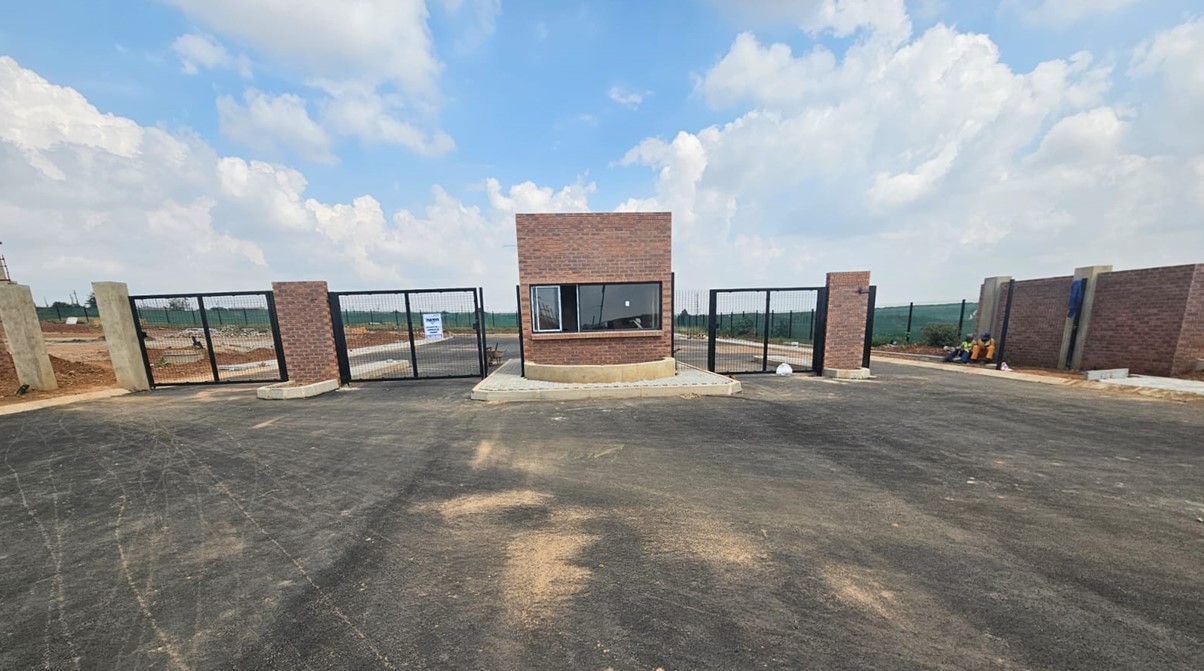
Building on this foundation and to further strengthen its contribution to the sector, Mogale City commenced construction of a third facility, the Swaneville Industrial Hub, in July 2025. This development is envisioned as a strategically planned automotive precinct aimed at concentrating vehicle manufacturing‑related activities, supplier networks and specialised skills within one location. A key focus of the project is the formalisation of an existing informal truck repair workshop currently operating on site.
Strategically located at the corners of Cumberland and Kingfisher Streets, the hub is positioned in proximity to a shopping centre intended to serve both the surrounding community and the industrial development, as well as a mini‑taxi rank and filling station. This location supports accessibility while encouraging economic integration between industrial activity and community services.
The development is currently in its first phase, which focuses on the construction of twelve workshops with two workshops currently under construction. This phase also includes the development of entrance signage walls, a guardhouse with a canopy and access‑control installations, associated bulk services (including water, sewage, stormwater and subsoil systems) to support future development, as well as an access road, kerbing and sidewalk paving. This phase has required a municipal investment of over R27 Million. Future phases will focus on the development of a truck repair workshop, a minibus taxi rank, a filling station, skills development and an office park.
This project forms part of a wider, long‑term master plan to establish a professionally designed precinct accommodating automotive workshops, business units, office spaces, training facilities and supporting amenities, all aimed at strengthening the growth and sustainability of automotive‑related SMMEs.
Beyond infrastructure delivery, the project has generated tangible socio‑economic benefits. Employment opportunities were created for local labour through the Expanded Public Works Programme (EPWP), providing income support and basic skills development to 36 individuals, comprising 24 males and 12 females. In addition, seven local SMMEs benefited through subcontracting opportunities, supporting local business growth across services such as brickwork, Clear view fencing, plastering, stone supply, plant hire and security, reinforcing the hub’s role as a catalyst for inclusive local economic development.
These automotive bubs reaffirm Mogale City’s commitment to creating pathways for township‑based mechanics and SMMEs to participate meaningfully in Gauteng’s automotive economy.